If you want a gentler, less wasteful routine, sustainable beauty is a helpful place to begin. It is not about replacing everything you own overnight or chasing perfection. It is about choosing more carefully, using what you have fully, and thinking about what happens to a product before you buy it and after you finish it.
For many UK readers, the appeal is as much about calm as it is about conscience. A bathroom shelf crowded with half-used bottles rarely feels restful. A smaller routine, built around products you trust and enjoy, often feels better as well as lighter. This guide explains what the idea means in practice, how to read claims without cynicism or guilt, and which small steps tend to matter most. It may also help to see how habits are already shifting, as explored in our overview of UK beauty consumer trends shaping 2026.
What sustainable beauty really means
At its simplest, sustainable beauty means considering the full life of a product. That includes where its ingredients come from and how they are sourced, how it is made and packaged, how long it lasts in use, and what remains when it is finished. No single product does all of this perfectly, which is why the idea works best as a direction rather than a strict rule.
It also includes how we behave as buyers. A thoughtfully made product that sits unused is still wasteful. A simpler product that you use to the last drop, store properly and replace only when needed can be the more considered choice. In that sense, sustainability is partly about design and partly about habit, and the habit side is entirely within our control.
Thinking this way changes the questions we ask. Instead of asking only whether something is new or popular, we can ask whether we need it, whether it suits our skin and our life, and whether we are likely to finish it with pleasure rather than obligation.
Sustainable cosmetics in everyday practice
The term sustainable cosmetics covers make-up and colour products made and chosen with that fuller picture in mind. In practice, it often looks less dramatic than marketing suggests. It can mean a foundation in a shade you have tested properly, rather than a guess bought in a hurry. It can mean a refillable compact you keep and top up, rather than a new case each time.
Choosing products you will actually use
Multi-use products can help, provided they genuinely suit you. A lip and cheek colour you reach for daily does more useful work than separate products that rarely leave the drawer. The same applies to versatile shades and textures that work across seasons. The most sustainable cosmetic is often the one that earns its place, gets finished, and does not need to be replaced by something else to do the same job.
Sustainable skincare without the clutter
Sustainable skincare follows the same logic. Skin usually responds better to a steady, suitable routine than to constant change, so a cleanser, moisturiser and sun protection you use consistently will often serve you better than a long line of products opened at once and abandoned in turn. Fewer open products also means less chance of items going out of date on the shelf.
When you do try something new, introduce it on its own and give it time. That makes it easier to tell whether it suits you, and it reduces the temptation to buy a replacement before the first product has had a fair chance. If something does not suit your face, it may still be useful on hands or body, where appropriate, rather than going straight in the bin.
Sustainable beauty packaging: refillable, recyclable and solid formats
Packaging is where waste is most visible, so sustainable beauty packaging deserves close attention. Good packaging protects the product, is not larger or more layered than it needs to be, and has a clear route afterwards, whether that is refilling, recycling or reuse. A single material is often easier to deal with than a mix of materials bonded together, which can be harder to separate.
Refills, solids and concentrates
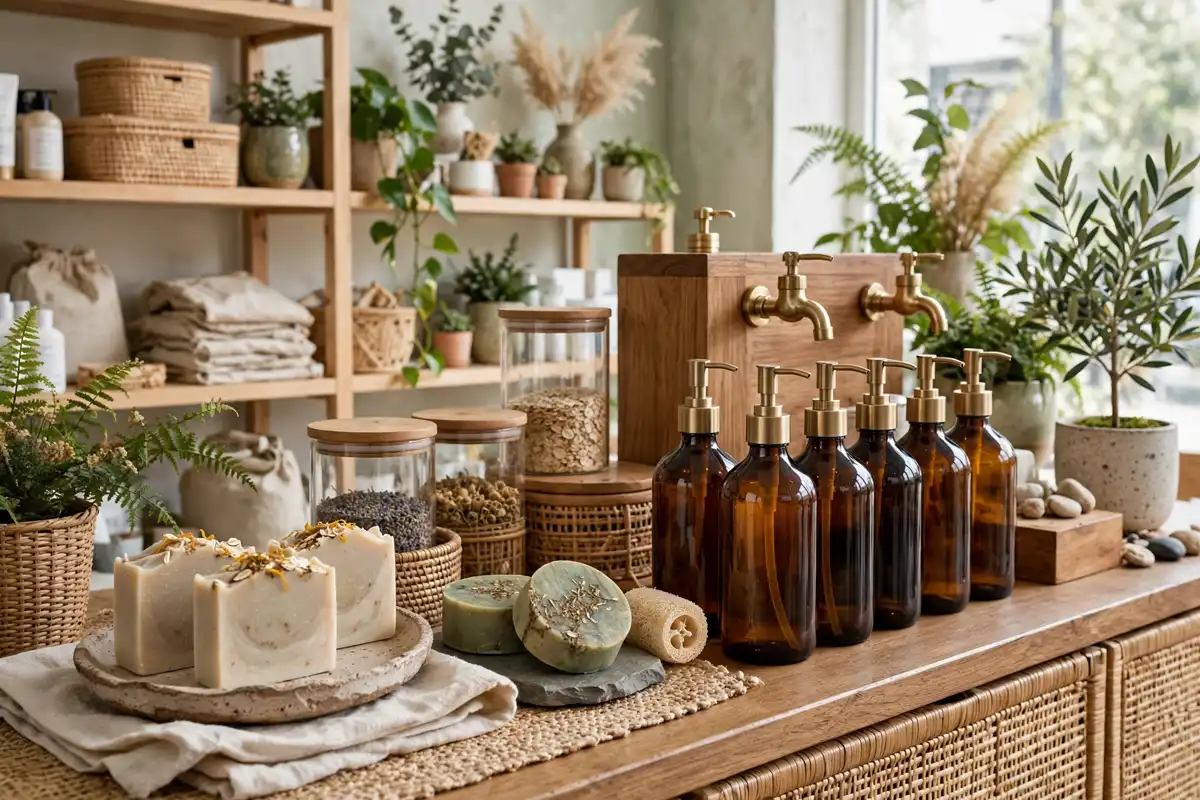
Refillable formats keep a durable outer container and replace only the inner product. Solid formats, such as shampoo and cleansing bars, remove the need for a bottle altogether and tend to be light to carry. Concentrates are mixed or used in small amounts at home, so less bulk is transported and stored. None of these suits everyone or every product, and that is fine. The useful question is whether the format fits your routine well enough that you will keep using it.
When packaging claims to be recyclable, it is worth checking what that means where you live, as collection rules vary. Rinsing containers, removing pumps or mixed parts where advised, and following local guidance gives materials a better chance of being dealt with as intended.
Eco friendly beauty habits and zero waste beauty
Products are only part of the picture. Eco friendly beauty is largely about everyday habits: turning the tap off while cleansing, using the amount a product actually needs rather than a generous extra squeeze, and finishing what is open before starting the next thing. These are unglamorous habits, but they are the ones that quietly reduce waste week after week.
Zero waste beauty takes that thinking further, aiming to leave as little behind as possible. Taken literally, it can feel out of reach, and for most people a gentler interpretation works better: waste less, in steady ways. Choose reusable cloths or pads you will genuinely wash and reuse. Cut open tubes, where it is safe to do so, to use what remains. Keep a small empties box so finished containers are recycled or returned together, rather than mixed into general waste in a hurry.
Green beauty, marketing claims and spotting greenwashing
The phrase green beauty is appealing, but it has no single agreed meaning. It is often used to suggest plant-based ingredients, gentler production or a lighter impact, yet the words alone do not tell you which of those is meant, or how far it goes. That vagueness is where greenwashing begins: a product presented as environmentally kind through imagery and language, while the detail behind the claim stays thin. Our guide to beauty trends in the UK shows how quickly such language spreads.
There are calm ways to read a label more clearly. Be cautious with broad words such as natural, clean, pure or kind to the planet when nothing more specific follows. Look instead for plain explanations: what the ingredient is and why it is there, what the packaging is made from, and what you are advised to do with it afterwards. Specific, modest claims are usually more trustworthy than sweeping ones.
What genuine certification means
Certification can help, in general terms, when it comes from an independent body with published standards that you can look up. A genuine scheme will say what it covers and what it does not, and it will apply to a defined product or ingredient rather than to a whole brand by association. If a logo cannot be traced to a real scheme, or the explanation around it stays vague, treat it as decoration rather than evidence.
Circular beauty and the beauty carbon footprint
Circular beauty describes a system where materials are kept in use for longer instead of being thrown away after one product. In practice, that includes refill stations where you top up a container you already own, take-back schemes where a brand collects empty packaging for reuse or proper recycling, and packaging designed from the start to be refilled, returned or remade. You can follow how ideas like these develop in our UK beauty industry news coverage.
The related idea of a beauty carbon footprint is a way of thinking about the emissions connected with a product across its life. Qualitatively, that includes making ingredients and packaging, transporting goods to shops and homes, the water and energy used in making products and in using them, such as heating water at home, and dealing with what is left at the end. The broad lesson is simple: buying less, choosing lighter and longer-lasting formats where they suit you, and wasting less all point in the right direction.
Calm, realistic steps for UK readers
You do not need a new shelf of products to begin. The most realistic steps start with what is already in your bathroom.
- Finish what is open before replacing it, and keep only one backup of true essentials.
- Buy the refill, solid or concentrate version where it genuinely suits your routine.
- Choose multi-use products you will reach for often, rather than single-purpose extras.
- Check local recycling guidance for empties, and use take-back or refill schemes where they are convenient.
- Read claims slowly. Favour specific explanations and recognised certification over vague green language.
- Replace one thing at a time, when it runs out, instead of rebuilding your whole routine at once.
Why product lifespan matters more than novelty
One of the quietest ideas in this subject is lifespan. A product that lasts well, suits you and is used completely has made good use of everything that went into making it. A product bought on impulse and abandoned after a few uses has not, however promising its label sounded. That is why taking time before a purchase is such a powerful habit. Sleeping on a decision, reading the full ingredient and packaging information rather than the headline claim, and picturing where the item will live in your routine can prevent most regret purchases.
Lifespan also depends on care once a product is home. Pumps and droppers kept clean, lids closed promptly, brushes washed and dried properly, and bars left on a draining dish so they dry between uses will all serve you for longer. These small acts of care are easy to overlook, yet they protect both the product and your skin, and they delay the next purchase without any sense of deprivation. There is a particular satisfaction in reaching the genuine end of something you have enjoyed, rather than clearing out a collection of disappointments. An empty container, finished well, tells you more about your real preferences than any trend report, and it makes your next choice calmer and better informed.
Doing enough: confidence, cost and keeping perspective
It is worth saying plainly that doing enough does not mean doing everything. Beauty routines sit inside real lives and real budgets, and a change that strains either is unlikely to last. Replacing a product with a refill or a solid format when the old one runs out costs no more effort than restocking as usual. Using less of a favourite product, or using it for longer, often saves money rather than spending it. The expensive version of this shift, a wholesale clear-out followed by a new set of purchases, is usually the least sustainable option of all, because it creates waste in the name of avoiding it. Gradual change, one finished product at a time, is both cheaper and kinder.
Confidence plays a part too. A routine you understand and trust is easier to keep simple, because you are less likely to be swayed by every new launch or anxious headline. Sustainable beauty, at its best, supports that confidence. It returns attention to how your skin feels, how much you enjoy your routine, and how your choices sit with your values, rather than to how your shelf compares with anyone else’s. If this article leaves you with one thought, let it be that small, steady and finished well beats grand, hurried and half-used, in beauty as in much else. Begin where you are, with the products already in front of you, and let each thoughtful replacement build quietly on the last.