

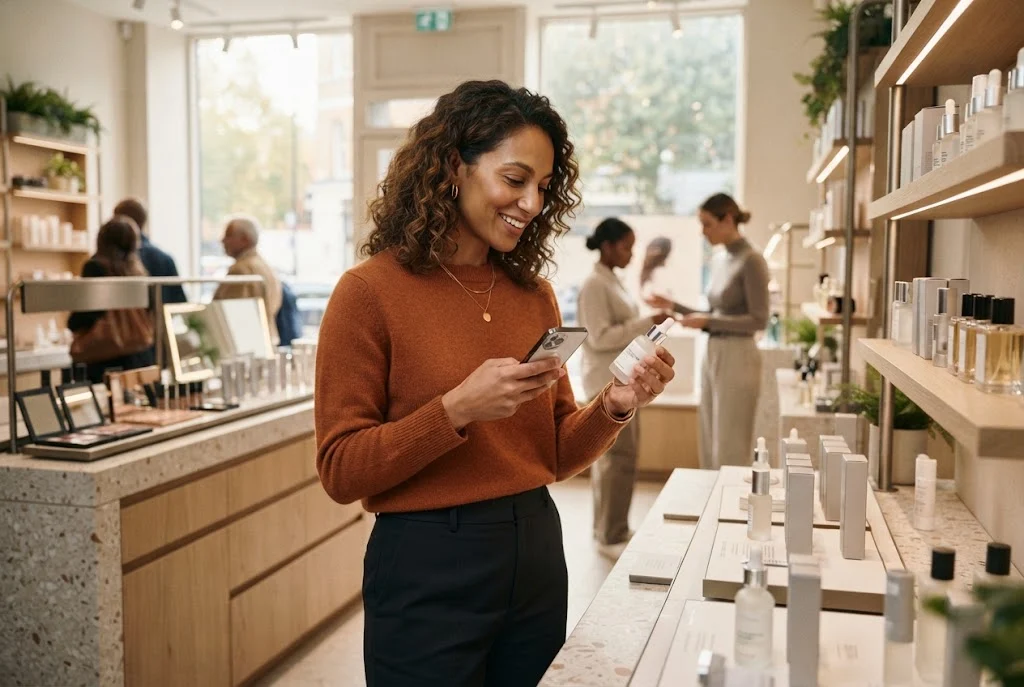
UK beauty consumer trends are changing the way people discover, compare and buy skincare, makeup, haircare and personal-care products. Today’s beauty shopper is not simply looking for the newest launch. Consumers are increasingly weighing product performance, price, convenience, ingredients, online reviews and personal relevance before deciding what deserves a place in their routine.
For beauty brands and retailers, these changes matter because consumer expectations are influencing everything from product development and marketing to retail experiences and digital content. At the same time, shoppers have more choice than ever, making trust and clarity increasingly important.
What Are the Biggest UK Beauty Consumer Trends?
The most important UK beauty consumer trends are centred on informed purchasing, value, personalisation, digital discovery and products that offer a clear benefit. Rather than following every new launch, many shoppers are becoming more selective about where they spend their money.
Social media continues to influence discovery, but seeing a product online does not automatically mean a consumer will buy it. Shoppers can quickly compare reviews, ingredients, prices and alternatives. This has created a more considered buying journey in which inspiration and research often happen across several platforms.
Value Is Becoming More Important
Price remains an important part of beauty purchasing decisions. However, value does not necessarily mean choosing the cheapest product. Consumers may compare the amount of product, expected results, ingredient profile, longevity and versatility before deciding whether something represents good value.
This is particularly relevant when shoppers are managing several beauty categories at once. A moisturiser, cleanser, serum, foundation, fragrance or hair treatment may each compete for a limited discretionary budget.
As a result, brands that clearly explain what a product does and why it is worth buying can have an advantage over products that rely only on attractive packaging or short-lived hype.
How Beauty Shopping Trends UK Consumers Follow Are Changing
Beauty shopping trends UK consumers follow are increasingly shaped by a mixture of online discovery and practical research. A shopper might first encounter a product through a social media video, then visit a retailer’s website, read customer reviews and compare prices before completing the purchase.
This means the traditional distinction between advertising, content and shopping is becoming less clear. Educational videos, product demonstrations, creator recommendations and customer reviews can all influence the same purchasing journey.
Digital Discovery Is Part of the Beauty Journey
Social platforms have become important spaces for beauty discovery. Short-form videos can demonstrate application techniques, before-and-after routines, ingredient explanations and product comparisons within seconds.
However, digital visibility does not guarantee long-term demand. Products that gain attention need to deliver an experience that matches consumer expectations. When shoppers feel that a product performs well, they are more likely to consider repurchasing it or recommending it to others.
The growing importance of digital discovery also means that beauty companies need to think beyond traditional advertising. Useful demonstrations, transparent product information and authentic customer experiences can help consumers move from curiosity to confidence.
Beauty Consumer Behaviour Is Becoming More Informed
Beauty consumer behaviour reflects a broader shift towards research-led purchasing. Consumers have access to ingredient lists, tutorials, expert commentary, customer reviews and product comparisons that were not as easily available in previous generations.
That accessibility can make shoppers more confident, but it can also make them more sceptical. Claims that sound impressive may receive closer scrutiny when consumers can immediately search for supporting information.
For brands, transparency is therefore becoming an important part of the customer experience. Clear descriptions, realistic product photography, straightforward instructions and accessible information can help reduce uncertainty before purchase.
Ingredients Matter, But So Does Context
Ingredient awareness continues to influence beauty preferences, particularly in skincare. Consumers may search for products containing specific ingredients because they have seen them discussed online or recommended as part of a particular routine.
Yet ingredient-focused shopping does not necessarily mean consumers want complicated routines. Many shoppers are also interested in straightforward products that are easy to understand and use.
This creates an interesting balance: consumers can be highly interested in formulations while simultaneously looking for simplicity. Brands that explain ingredients in clear, useful language can make complex information easier to navigate.
Beauty Preferences UK Shoppers Are Developing
Beauty preferences UK consumers display are increasingly personal rather than based on one universal definition of beauty. People have different skin types, lifestyles, budgets, routines and expectations, so a single product or aesthetic is unlikely to appeal equally to everyone.
Personalisation is therefore becoming more relevant across skincare, makeup, haircare and fragrance. Consumers may look for products that fit their individual needs rather than simply choosing what is most popular.
This also helps explain why niche brands can attract attention. A company with a clear purpose and a specific audience can sometimes create stronger relevance than a broad product range without a distinctive identity.
Convenience Influences Product Choices
Convenience is another important consideration. Busy consumers may prefer multifunctional products, easy application formats or routines that require fewer steps.
This does not mean detailed beauty routines are disappearing. Instead, consumers are likely to choose between different levels of complexity depending on their lifestyle and priorities.
A simple morning routine may be preferred on a busy weekday, while a longer skincare or self-care routine can become part of a relaxing evening ritual. Beauty brands can respond by offering products that work naturally within different lifestyles rather than assuming every customer wants the same routine.
Beauty Spending Trends and the Search for Value
The Beauty spending trends are influenced by both aspiration and practicality. Consumers may still be willing to pay more for products they believe offer meaningful benefits, while becoming more selective about less essential purchases.
This creates opportunities at different price points. Premium products can appeal to shoppers seeking specialised formulations or a luxury experience, while affordable alternatives can attract consumers who want to experiment without making a large financial commitment.
The key issue is perceived value. A higher price needs to be supported by a convincing reason, whether that comes from formulation, performance, experience, packaging, service or brand positioning.
For consumers, comparing products has also become easier. Online retailers allow shoppers to examine competing products quickly, while reviews can provide additional insight into how products perform in everyday use.
What Beauty Trends 2026 Mean for Consumer Choices
Beauty trends 2026 are likely to continue reflecting the tension between experimentation and practicality. Consumers can be interested in viral products and emerging aesthetics while still wanting reliable staples that work consistently.
Recent beauty coverage also shows how quickly product launches, social aesthetics and new tools can enter the conversation. New skincare, makeup, fragrance and beauty technology launches continue to create fresh opportunities for discovery, while consumers remain selective about which products become part of their regular routines.
For shoppers, this means the most visible product is not always the most suitable one. Understanding personal needs, checking product information and considering whether a trend has genuine relevance can lead to better purchasing decisions.
Viral Products Can Create Fast Demand
A product can become highly visible after appearing repeatedly in social content. This can generate curiosity and encourage consumers to search for reviews, demonstrations and alternatives.
However, viral popularity can be temporary. Once the initial excitement fades, products generally need to deliver genuine value to remain relevant.
This distinction between attention and lasting demand is important for both shoppers and brands. Consumers can enjoy experimenting with new trends without abandoning products that consistently meet their needs.
Trust Is Becoming a Major Part of Beauty Purchasing Trends
Beauty purchasing trends are increasingly connected to trust. Consumers want to know what they are buying, how to use it and whether the claims surrounding a product are credible.
For cosmetics sold in Great Britain, product information is also supported by regulatory requirements. GOV.UK explains that cosmetic products must meet safety requirements and provide information such as ingredients, precautions, product identification and details of the responsible person.
Consumers can therefore benefit from checking packaging and product information rather than relying entirely on social media recommendations. This is particularly important when purchasing unfamiliar products from unfamiliar sellers.
Clear information can also benefit reputable brands. When consumers can easily understand a product’s purpose, ingredients and usage instructions, they have fewer reasons to hesitate before buying.
The Future Beauty Consumers Will Expect More Personalisation
The future beauty consumers will serve are likely to expect brands to understand individual needs rather than treating the market as one large audience. Personalised recommendations, tailored routines and relevant product education can all help make the shopping experience more useful.
Technology may support this development through digital consultations, recommendation tools, virtual product experiences and increasingly sophisticated ecommerce platforms. Yet technology alone is unlikely to build loyalty. The recommendations still need to be useful, understandable and relevant.
Human expertise will continue to have a role as well. Beauty professionals, retailers, creators and knowledgeable customer-service teams can help consumers navigate increasingly crowded product categories.
Retailers Need to Connect Online and Offline Experiences
The future of beauty shopping is unlikely to be entirely online or entirely physical. Consumers can discover products digitally while still valuing the opportunity to see, test or discuss products in person.
This creates an opportunity for retailers to connect ecommerce with physical experiences. Product education, demonstrations, consultations and convenient fulfilment can work together to create a smoother customer journey.
The changing retail environment is also becoming part of wider UK beauty industry news, particularly as brands and retailers experiment with new ways to engage consumers.
What UK Beauty Brands Can Learn From Consumer Behaviour
The changing market offers several practical lessons for beauty businesses. First, consumers need a clear reason to choose one product over another. Second, useful information can be just as important as promotional messaging. Third, brands need to understand the difference between short-term attention and long-term customer loyalty.
Brands should also monitor changing beauty trends UK consumers are discussing without automatically chasing every trend. A better approach is to identify which changes align with the brand’s audience, product range and positioning.
Consumer feedback can provide another valuable source of insight. Reviews, customer questions, repeat purchases and common complaints can reveal what people actually value after the excitement of a product launch has passed.
How Consumers Can Make Smarter Beauty Purchases
For shoppers, understanding UK beauty consumer trends can make it easier to separate genuine needs from temporary hype. Before purchasing a new product, consider what problem it is intended to solve and whether that need already has a suitable solution in your routine.
It can also help to compare ingredients, directions, product size, reviews and total cost rather than focusing only on a promotional price. When buying cosmetics from unfamiliar sources, checking product information and seller credibility is particularly important.
GOV.UK advises consumers to be cautious when cosmetic products have missing or minimal information, unclear purposes or no identifiable responsible person.
Finally, trends can be enjoyed without becoming obligations. Beauty is highly personal, and the best routine is one that suits an individual’s preferences, lifestyle and budget.
The Direction of UK Beauty Consumer Trends
The direction of UK beauty consumer trends points towards a market where shoppers are increasingly connected, informed and selective. Digital content will continue to shape discovery, while value, convenience, personalisation and trust will influence whether that initial interest becomes a purchase.
For beauty businesses, the challenge is not simply to create products that attract attention. It is to build products and experiences that remain useful after the trend cycle moves on. For consumers, the opportunity is to use the growing amount of available information to make choices that genuinely fit their needs.
As the UK beauty market continues to evolve, watching changes in consumer behaviour alongside emerging products, retail developments and wider beauty culture will provide a clearer picture of where the industry is heading.
