Buying used cars can offer UK drivers more choice and potentially lower purchase prices than buying a new vehicle. However, a second-hand car needs to be assessed on more than its advertised price. Vehicle history, maintenance records, mileage, condition, running costs and potential resale value can all influence whether a particular car represents a sensible purchase.
A good used-car decision starts before you visit a seller. By defining your requirements, researching comparable vehicles and checking important records, you can create a clearer picture of what you are actually buying. The goal is not simply to find a cheap car but to choose a vehicle whose condition, ownership costs and expected lifespan make sense for your circumstances.
Why Used Cars Require Careful Research
Every second-hand vehicle has a history. It may have been driven mainly on motorways, used for short urban journeys, regularly serviced or maintained only when something went wrong. Two cars of the same age and model can therefore have very different ownership prospects.
This is why the headline price should not be the only factor in your decision. A vehicle that costs slightly more but has strong maintenance records and a well-documented history may provide better value than a cheaper example requiring immediate repairs.
Good ownership planning means considering both the cost of buying the car and the costs likely to follow after the purchase.
Set a Realistic Used-Car Budget
Before searching listings, decide how much you can comfortably spend. If you are paying cash, avoid assuming that every pound of available savings should go towards the purchase. Keeping some money available for insurance, servicing, tyres and unexpected repairs can provide useful financial flexibility.
If you are using finance, calculate the complete monthly ownership cost rather than looking only at the advertised repayment. Our guide to car finance and vehicle ownership budgeting explains why monthly repayments should be assessed alongside the wider costs of running a vehicle.
A realistic budget should also account for immediate expenses after purchase. Even a well-maintained used car may need a service, new tyres or other routine work during its ownership.
Decide What Type of Used Car You Need
It is easy to become distracted by attractive listings. A better approach is to decide what the vehicle needs to do before you start browsing.
Consider how many people regularly travel in the car, how much luggage you carry, how far you drive, where you normally park and whether your journeys are mainly urban, rural or motorway-based.
Fuel type, transmission, engine size and equipment should also be considered in the context of your actual driving habits. There is little benefit in paying extra for a specification that does not solve a genuine need.
Compare Similar Second-Hand Vehicles
Once you know what you need, compare several examples of the same or similar models. Look at age, mileage, specification, condition and asking price rather than focusing on one listing.
Online marketplaces can make this comparison easier. Our guide to AutoTrader UK and better vehicle buying research explains how online listings and comparison tools can help buyers establish a more informed view of the market.
Price differences should be investigated rather than automatically interpreted as bargains. A cheaper vehicle may have higher mileage, fewer features, incomplete maintenance records or cosmetic and mechanical issues that are not immediately obvious.
Check the Vehicle History
Vehicle history is one of the most important areas to investigate when buying used cars. A clean-looking exterior cannot tell you whether a vehicle has previously suffered significant damage, changed hands frequently or missed important maintenance.
Ask the seller for relevant documentation and compare the information across available records. Check the registration details, MOT history, mileage information and service documentation where available.
Official MOT information can be checked through GOV.UK, including MOT history and recorded mileage information. Buyers should use this information alongside the vehicle’s paperwork and a physical inspection rather than relying on one source alone.
If information appears inconsistent, ask questions before progressing with the purchase. Missing documentation does not automatically mean that a vehicle is unsuitable, but it can make its history harder to establish.
Maintenance Records Can Reveal More Than Mileage
Mileage is useful, but it does not tell the complete story of a vehicle’s condition. A higher-mileage car that has been consistently maintained may deserve closer consideration than a low-mileage vehicle with limited service evidence.
Maintenance records can show when servicing took place and whether important components have been replaced. They can also provide clues about how seriously previous owners approached routine care.
Look for evidence of regular servicing and ask whether there are records for significant work. If the vehicle has recently received expensive maintenance, documentation of that work can help you understand what has already been addressed.
Inspect Tyres and Other Wear Items
Consumable components deserve attention because they can create immediate ownership expenses after purchase. Tyres are a good example.
Check the tread, sidewalls and general condition of all four tyres. Look for uneven wear or visible damage and ask when they were last replaced if the information is available.
Our guide to tyre services and preventive vehicle care explains why tyre condition matters for road safety and why timely replacement can form part of responsible vehicle maintenance.
Also consider brakes, lights, wipers, suspension and other components that may require attention. The aim is not to diagnose every mechanical issue yourself but to identify anything that should be investigated professionally before buying.
Arrange a Proper Vehicle Inspection
Photographs and descriptions are useful for creating a shortlist, but they cannot provide a complete assessment of a used vehicle.
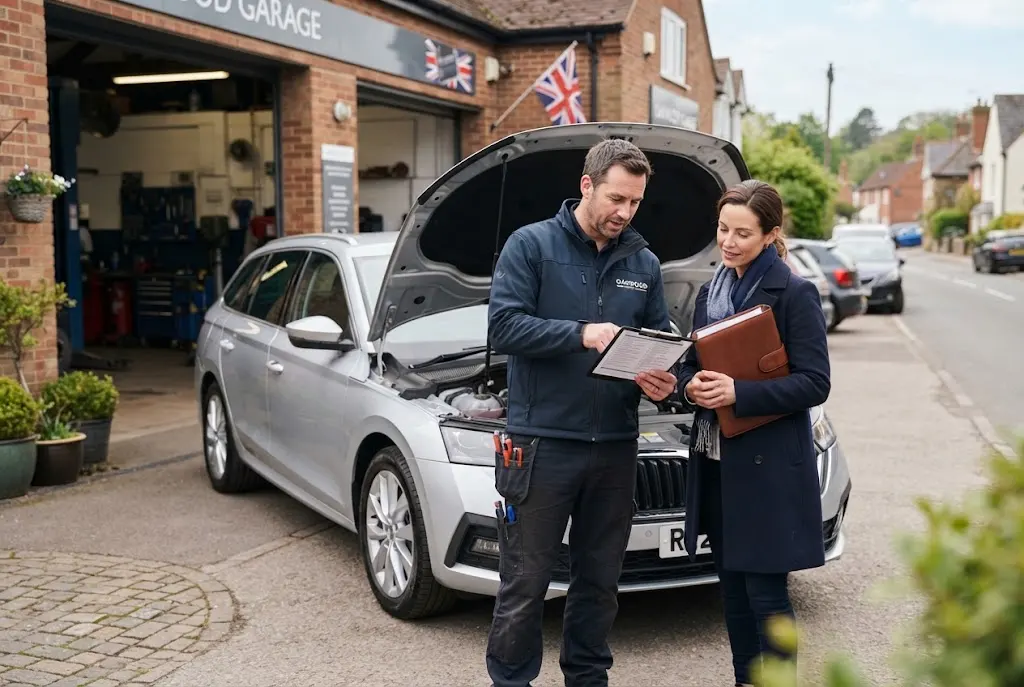
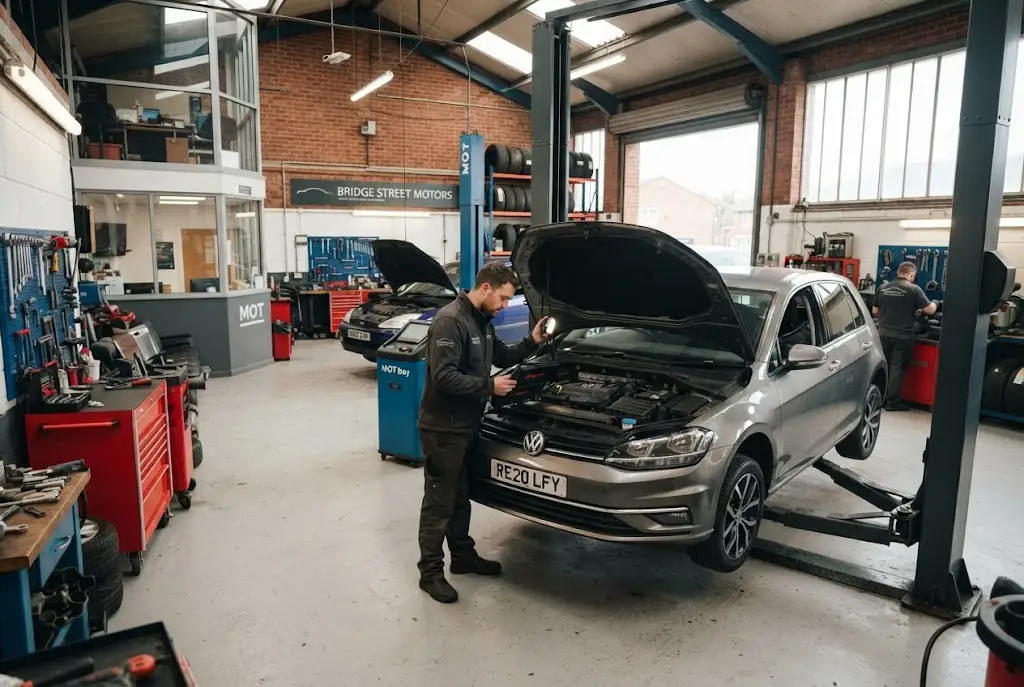
Inspect the car in person and, where appropriate, arrange a professional inspection. Look at the bodywork in good lighting, check the interior for signs of excessive wear and examine the engine bay for obvious concerns.
Pay attention to inconsistencies. If the mileage appears low but the steering wheel, pedals and driver’s seat show substantial wear, ask why. Similarly, differences in paint colour or panel condition may warrant further investigation.
A professional inspection can be particularly valuable when purchasing an expensive vehicle or when the history is incomplete.
Take the Car for a Test Drive
A test drive provides an opportunity to assess how the vehicle behaves rather than how it looks while parked.
Pay attention to steering response, braking, acceleration, gear changes and general ride quality. Listen for unusual noises and watch for warning lights. If the car has a manual gearbox, check how the clutch and gears feel. For an automatic, pay attention to smoothness and response during changes.
The test drive should reflect normal use as much as possible. If you regularly drive on faster roads, where safe and permitted, make sure you understand how the car behaves in those conditions rather than limiting the assessment to a short trip around a dealership.
Consider the Likely Ownership Costs
A used car can have a lower purchase price while still being expensive to operate. Insurance, fuel, servicing, repairs, tyres and other running expenses all contribute to the overall cost.
Older vehicles may require more maintenance, while some premium models can have higher parts and servicing costs. A smaller vehicle may have a lower purchase price but still need careful comparison if its insurance or maintenance costs are relatively high.
Try to estimate the likely annual running costs before buying. You will not be able to predict every repair, but understanding the routine expenses can make the ownership decision more realistic.
Think About Resale Value
Resale value is another factor worth considering, particularly if you do not expect to keep the vehicle for many years.
Resale prices can be influenced by model demand, age, mileage, condition, service history, specification and broader market conditions. There is no guarantee that a particular vehicle will retain a specific percentage of its purchase price.
However, keeping the car properly maintained and retaining service records can help you document its condition when it eventually comes time to sell.
Thinking about resale value does not mean buying only the most popular model. It means considering how easy the vehicle may be to sell later and how depreciation fits into your overall ownership plan.
Check Whether the Asking Price Makes Sense
A sensible buyer compares several similar vehicles before deciding whether a listing represents good value.
Compare vehicles with broadly similar age, mileage, engine, specification and condition. If one is significantly more expensive, identify what justifies the difference. If one is considerably cheaper, investigate why.
Online valuations and marketplace comparison tools can provide useful reference points, but they should not replace your own assessment of the vehicle. Actual value depends on the specific car rather than the model name alone.
Be Careful With Private Sellers
Buying from a private seller can provide access to different vehicles and prices, but the buying process may differ from purchasing from a dealership.
Ask clear questions about ownership history, maintenance, faults and reasons for sale. Check the documentation carefully and make sure the vehicle details match what you have been told.
Never allow pressure to make you skip basic checks. A seller who is unwilling to answer reasonable questions or allow appropriate inspection should make you more cautious.
Compare Dealership Options
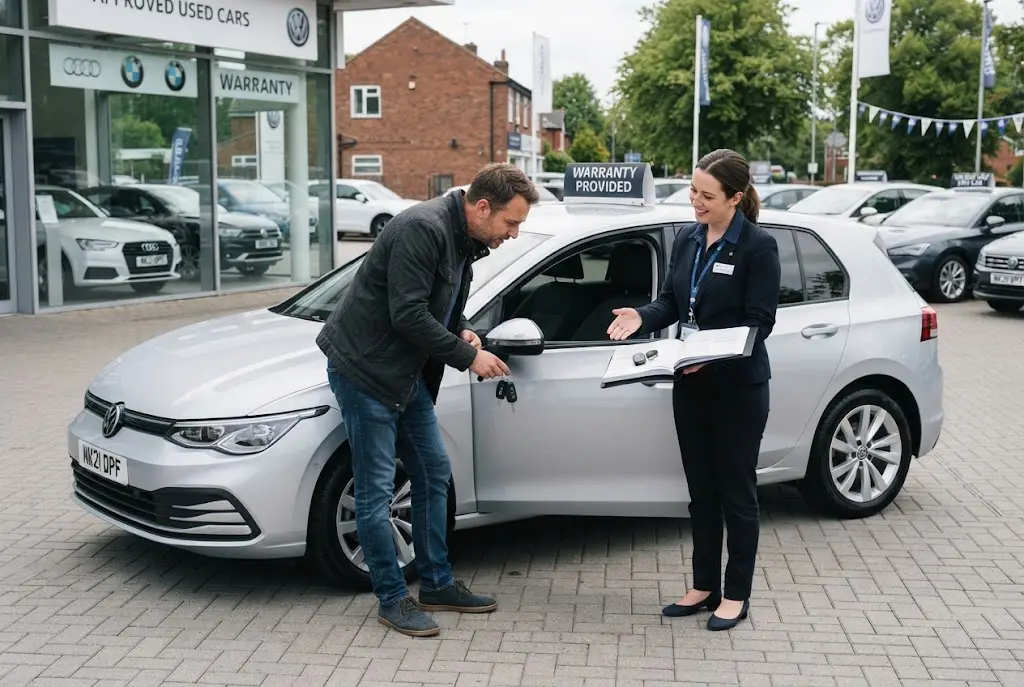
Dealerships can provide a different purchasing experience, particularly for buyers who value structured documentation or additional services. However, buyers should still compare the actual vehicle rather than assuming that buying from a business automatically guarantees the best choice.
Consider the dealer’s reputation, the information provided about the vehicle, available warranty terms and the clarity of the sales process. Read the documentation carefully and ask questions before committing.
Comparing several dealers can also help you understand whether a particular vehicle is competitively priced.
Do Not Let a Low Price Override Your Checks
One of the biggest risks when shopping for used cars is allowing a low price to create a false sense of urgency.
If a vehicle appears unusually cheap, investigate the reason. It may have higher mileage, require work, have a less desirable specification or simply be priced aggressively. Sometimes there is a straightforward explanation, but you should establish that explanation before paying a deposit.
Likewise, avoid allowing a seller’s urgency to replace your own buying process. A genuinely suitable vehicle should still be assessed carefully.
Prepare for the First Year of Ownership
Your purchase budget should not end on the day you collect the car. Consider what the first year is likely to involve.
Insurance may be due immediately, while servicing, tyres or other maintenance may become necessary during the first few months. If the vehicle’s next service is approaching, include that cost in your planning.
Keeping an emergency reserve can also reduce stress when an unexpected issue appears. Our article on repair finance and planning for unexpected vehicle costs looks at how drivers can prepare for repair expenses and evaluate payment options when necessary.
Keep Your Records After Buying
Good ownership does not stop after the purchase. Keep invoices, service records and other relevant documentation throughout the vehicle’s life.
These records can help you understand what work has already been completed and what may be due next. They can also become useful evidence of proper maintenance if you later decide to sell the car.
Regular maintenance is another part of protecting the vehicle’s condition. Address warning signs early and avoid postponing essential repairs simply because the car remains driveable.
Used Cars and Smarter Buying Decisions
The best used cars purchase is not necessarily the cheapest one. It is the vehicle that fits the buyer’s requirements, budget and ownership expectations while offering a reasonable balance between condition, history, running costs and future value.
Research gives you the information needed to make that judgement. Compare listings, investigate history, examine maintenance records, inspect the vehicle and take a proper test drive. Then consider whether the total ownership cost remains comfortable for your circumstances.
Taking these steps may require more time at the beginning, but careful research can reduce the likelihood of discovering an expensive surprise immediately after purchase.
Final Thoughts on Buying Used Cars
Buying used cars wisely requires a broader approach than comparing advertised prices. A vehicle’s history, maintenance records, current condition, likely running costs and potential resale value all contribute to the real ownership picture.
Start with a realistic budget and clear requirements. Use online listings to compare suitable vehicles, but confirm important information through documentation and physical inspection. Where appropriate, arrange a professional inspection before completing the purchase.
Most importantly, give yourself enough time to make a decision. A carefully researched second-hand vehicle can provide years of useful transport, while a rushed purchase can turn an attractive price into a much more expensive ownership experience.