There is a particular exhaustion that comes from a holiday spent racing: three cities in four days, a checklist of sights, and a camera roll fuller than your memory of any of it. Slow travel is the deliberate opposite. It means choosing fewer places, staying longer, and letting a destination reveal itself at walking pace. Done well, slow travel sends you home genuinely restored rather than quietly needing another break. This guide explains how to plan a slower trip, whether you have a fortnight abroad or a long weekend two counties away.
What Slow Travel Actually Means
Slow travel is not simply travelling slowly, and it is certainly not travelling cheaply, though it often costs less. It is a mindset borrowed from the slow food movement: depth over breadth, connection over collection. Instead of asking “how much can we see?”, the slow traveller asks “what would it feel like to live here for a while?” You rent the apartment rather than the hotel room, return to the same cafe until the owner knows your order, and let one neighbourhood become familiar. The souvenirs are different too: a market routine, a favourite bench, a handful of phrases in the local language, and days you remember individually instead of as a blur.
This approach suits the philosophy behind much of what ReflectNow publishes. The same calm intentionality we explore in slow beauty applies perfectly to a journey: strip away the excess, keep what genuinely serves you, and give it your full attention.
Choose One Base and Stay Put
The single most effective slow travel decision is staying in one place. A week in one town teaches you more, and tires you less, than seven one-night stops ever will. Choose a base with layers: a market day, a couple of good walks from the door, a railway station for day trips, and somewhere excellent to eat that does not require a booking three weeks ahead. From that base, take day trips if you wish, but return each evening to streets you are beginning to recognise. Familiarity is not the enemy of travel; it is where the good part starts.
In Britain this might mean a small town in the Dales, a Cornish harbour out of season, or a corner of a city you love but have only ever rushed through. Abroad, it means the second city rather than the capital, the village above the famous resort, the apartment two streets back from the seafront where the bakery queue is local. Wherever it is, unpack properly when you arrive. Living out of a suitcase keeps your nervous system in transit mode; putting your clothes in a drawer tells it you have arrived.
Plan Less, Notice More
Slow travel itineraries have white space in them. One anchor a day is plenty: a market in the morning, a long lunch, an unplanned afternoon. Leave room for the discoveries no guidebook lists: the church hall jumble sale, the river path that was not on the map, the conversation that turns into a dinner invitation. Many slow travellers keep a notebook rather than a schedule. If that appeals, our guide to journaling for beginners shows how a ten-minute evening practice turns a trip into something you keep for life, because the details you write down are the ones that survive.
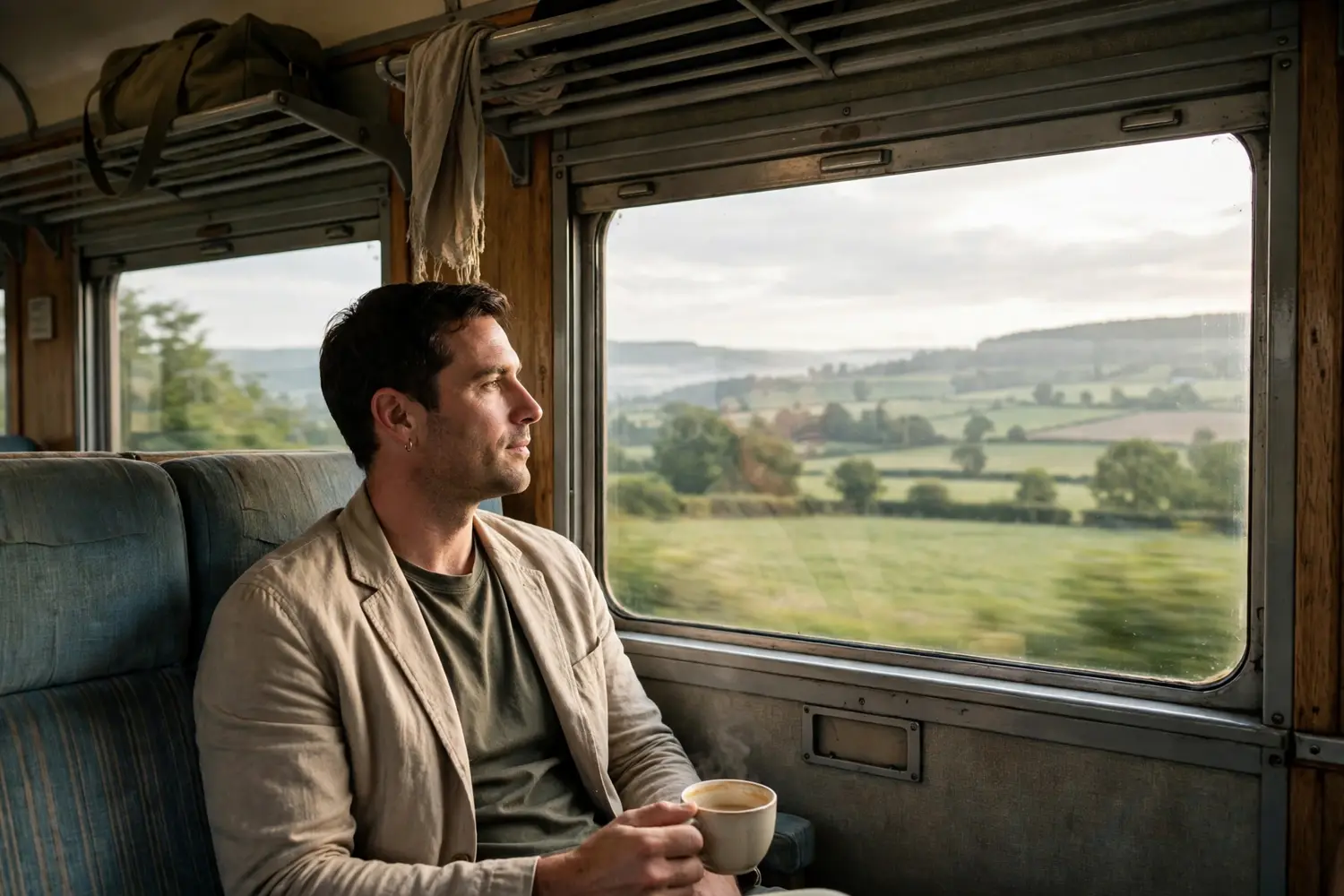
Travel days deserve the same gentleness. Take the slower train and watch the country change. Stop at the town halfway because its name sounds interesting. The journey is not dead time between destinations; on a slow trip, it is part of the material. Arriving slightly later and considerably calmer is a trade worth making every single time.
Slow Travel and the Phone in Your Pocket
Nothing speeds a trip up like a phone. The constant photographs, the checking of reviews for every coffee, the messages from home: each one pulls you out of the place you travelled to be in. Slow travellers set soft rules. Photograph at the end of the visit, not throughout it. Keep the phone in a bag during meals. Choose one hour in the evening for messages rather than a drip-feed all day. It also helps to notice what the feed does to your eye for a place; our piece on beauty filters and self image explores how filtered images quietly distort expectations, and the same is true of the impossibly golden travel photography that makes real places feel like disappointments. The real place, unfiltered, is the one you are actually in.
Eat, Walk, Repeat: The Rhythms of a Slow Day
Structure a slow day around pleasures that repeat. Walk in the morning while the light is good and the streets are quiet. Shop at the market for lunch rather than defaulting to a restaurant. Rest in the middle of the day if that is the local custom, and take your main meal when the locals take theirs. Cook sometimes, even on holiday; a simple supper from market ingredients, eaten slowly, teaches you more about a place than another famous sight. Repetition is the secret: the second visit to the same bakery is when the travel becomes belonging.
The Bottom Line
Slow travel asks very little of you: one base, a loose plan, a notebook, and the discipline to let some hours stay empty. In return it gives you the thing holidays are supposed to give and often do not: genuine rest, real memories, and the feeling of having been somewhere rather than merely through it. Start with your next trip, however small. Stay one place. Walk it until you know it. You will come home with less luggage in every sense.