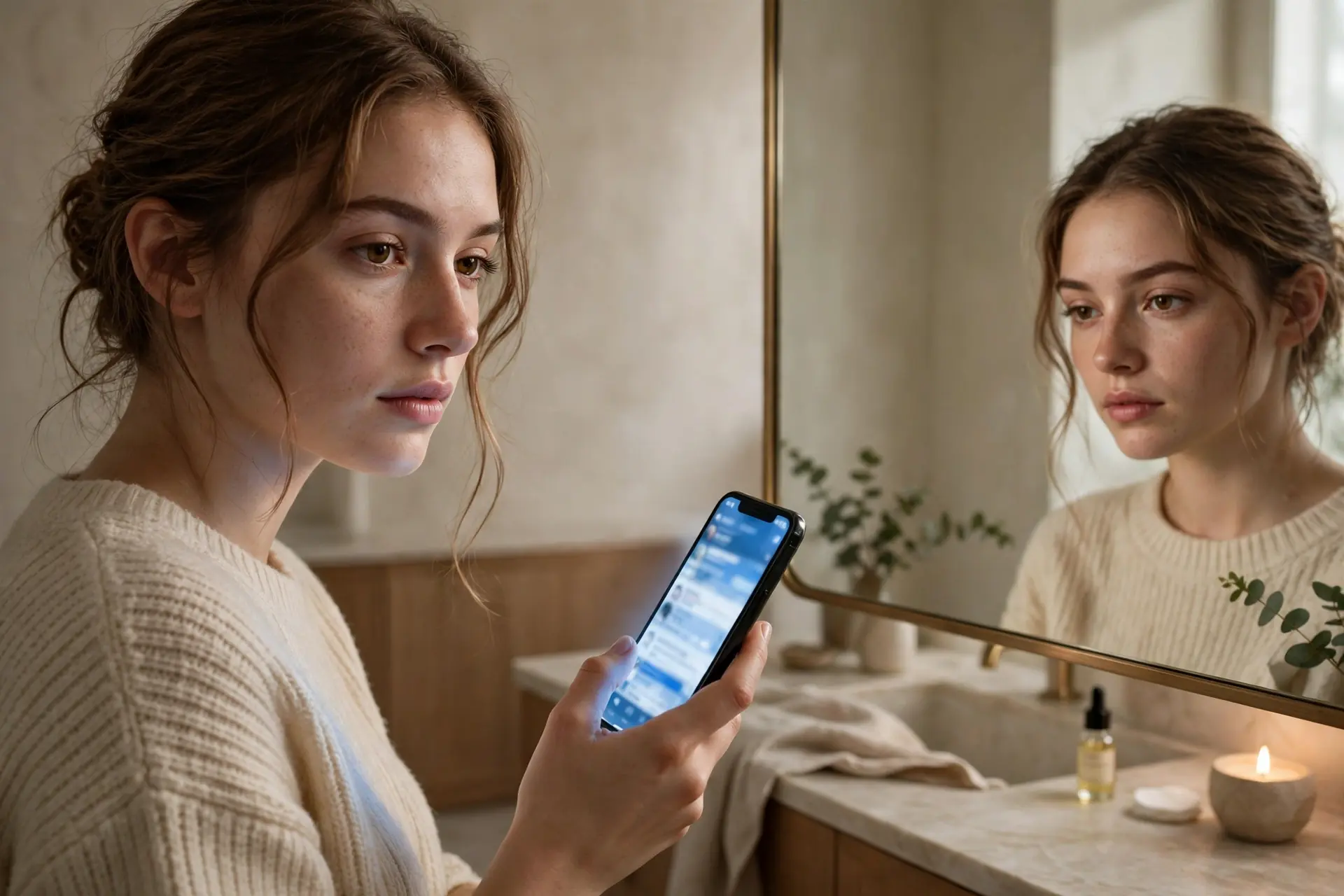
Open any social app and the faces looking back at you have been quietly perfected: skin smoothed to porcelain, jaws sharpened, eyes brightened, noses narrowed by a fraction. Most of us know, intellectually, that filters are at work. Yet the relationship between beauty filters and self image is not settled by knowing. The face we see most often, our own, increasingly appears in a front-facing camera, and it can start to feel like the unfiltered version is the flawed one.
This article takes a reflective look at how filters shape the way we see ourselves, why the comparison stings, and how to build a healthier relationship with the face in your own mirror.
Beauty Filters and Self Image: How We Got Here
Filters began as play: dog ears, flower crowns, gentle glamour effects that nobody mistook for reality. Over time they became subtler and more powerful. Today’s beauty modes operate by default on many phones, smoothing and reshaping before you have consciously chosen anything. The edited face has become the baseline against which the real one is judged.
The shift matters because of frequency. A magazine cover was something you saw occasionally and knew was produced by professionals. A filtered selfie is something you produce yourself, daily, and share with people who know your real face. That closeness makes the gap harder to shrug off.
Why Filtered Faces Affect Us So Much
Humans are wired to compare, and faces are the most personal comparison of all. When the comparison target is your own face, slightly improved, the message lands differently from comparing yourself to a celebrity. It suggests that a better version of you is readily available, and that the unedited version is somehow the rough draft.
For younger users still forming their self image, and for anyone already anxious about their appearance, that suggestion can take root. People describe checking the mirror after using filters and feeling a small shock, or avoiding video calls without a beauty mode. These are understandable responses to a strange new environment, not vanity. The calmer counterweight, explored in our piece on slow beauty, is to spend more time with your actual skin: touching it, caring for it and seeing it in natural light.
Real Skin Has Texture, and That Is Normal
One of the quiet distortions of filter culture is the erasure of texture. Real skin has pores, fine lines, freckles, moles, redness that comes and goes and shine by the end of the day. Filtered skin has none of these, which makes ordinary human skin look like a problem.
Interestingly, the broader market is beginning to push back. Skin-first makeup, sheer bases and routines built around comfort rather than coverage run through many of the beauty trends shaping 2026. Letting skin look like skin is becoming a deliberate aesthetic choice, not a failure of effort.
Kinder Habits for Life With a Front-Facing Camera
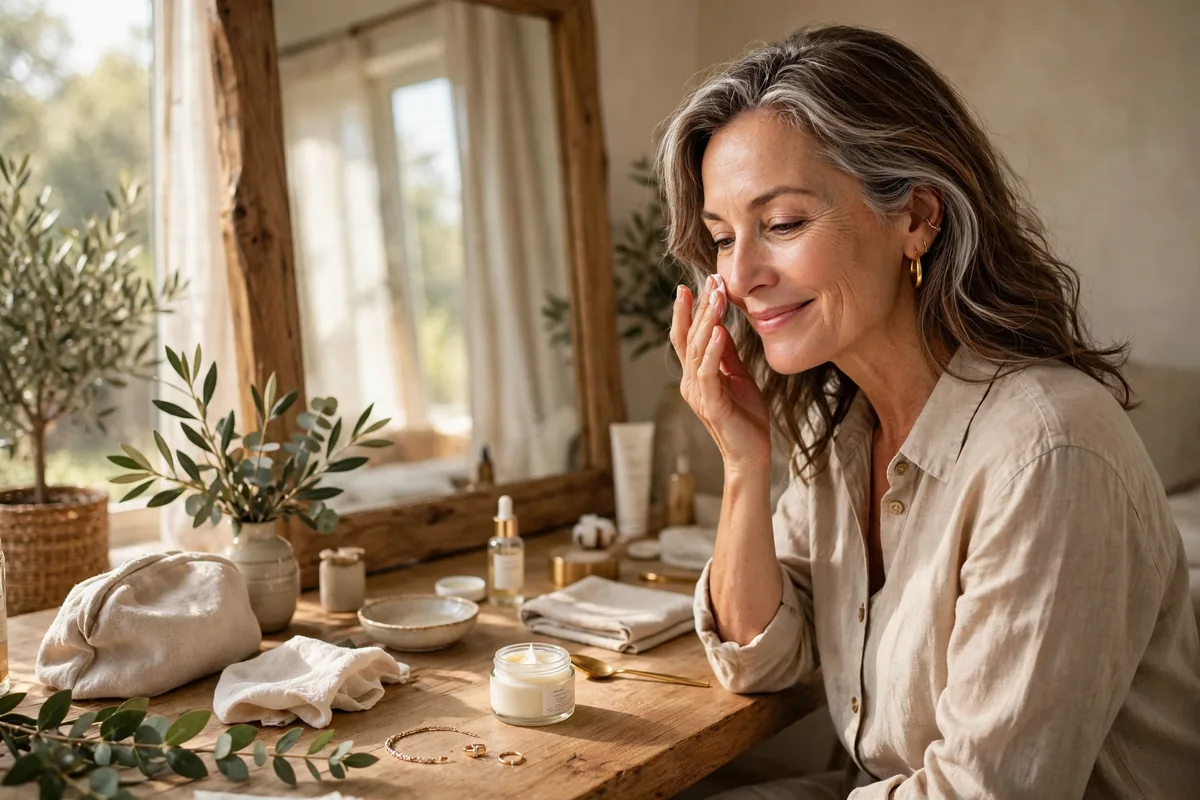
You do not need to abandon filters to protect your self image. A few habits soften their influence. Turn off default beauty modes where you can, so the unedited face is the one you meet most often. Take some photographs in good natural light and keep them; they are often kinder than bathroom lighting or a harsh flash, and they are honest.
Curate your feed as you would a room you live in. Accounts that leave you feeling worse about your face can be muted without ceremony. Seek out creators who show texture, ageing and ordinary days. And when you catch yourself zooming in on a perceived flaw, remember that nobody else studies your face at that magnification. The themes in UK beauty consumer trends point the same way: wellbeing and authenticity are becoming selling points because people are asking for them.
It also helps to move some beauty rituals offline entirely. A routine done slowly, by feel and scent rather than by screen, reconnects you with your face as something you live in rather than something you display. Our guide to a calmer, more sustainable beauty routine is built on exactly that idea.
Talking About Filters With Teenagers and Family
If there are teenagers in your life, this conversation is worth having out loud. Young people often assume that everyone else’s skin genuinely looks the way it does online, including the skin of the friends sitting beside them. Simply naming the machinery, the default smoothing, the reshaping, the ring light, can loosen its grip. Sharing your own unfiltered photographs, and being relaxed about them, teaches more than any lecture.
It helps to keep the tone curious rather than alarmist. Filters are also creative tools, and plenty of young people use them with full irony and enjoyment. The goal is not to ban them but to make sure the unedited face stays familiar and acceptable, so that the choice to filter remains a choice. Families that talk about images the way they talk about advertising, as something made by someone, for a purpose, tend to produce viewers who are harder to fool and kinder to themselves.
There is also a middle path worth noticing: many people now post a mixture, some images playful and edited, others plain and unadorned. That mixture quietly resets expectations for everyone watching, because it proves the same face can be both. If you have any influence in your corner of the internet, even a small one, posting the honest photograph now and then is a genuinely generous act.
A Face You Can Trust
Beauty filters and self image will keep evolving together; the technology is not going away. The question is who sets the standard for your face. A filter can be a toy, a creative tool or a small confidence boost for a photograph, and none of those uses is a moral failing. The harm begins when the edited version becomes the only acceptable one.
The steadier ground is familiarity: knowing your face in morning light, in laughter, in tiredness and in health, and treating all of those as the real one. As we explored in our piece on beauty confidence after 40, confidence rarely comes from perfection. It comes from recognition, the quiet feeling that the face in the mirror is yours, and that it is enough.