Wheel alignment is an important part of vehicle maintenance that can influence steering, tyre wear, handling and overall driving confidence. When the wheels are correctly positioned according to the vehicle manufacturer’s specifications, the car should track predictably and the tyres should make appropriate contact with the road.
Alignment problems can develop gradually or appear after hitting a pothole, kerb or other road hazard. Drivers may notice the vehicle pulling to one side, an off-centre steering wheel, unusual tyre wear or changes in handling. Recognising these signs early can help prevent further wear and give you a better chance of maintaining a smoother, more controlled drive.
What Is Wheel Alignment?
Wheel alignment involves checking and, where necessary, adjusting the angles of the wheels so they meet the vehicle manufacturer’s specifications. The main alignment measurements include camber, caster and toe.
These angles influence how the wheels sit in relation to the road and to one another. Correct settings help the vehicle maintain predictable steering behaviour and allow the tyres to work as intended.
Alignment is sometimes called tracking, although the exact service offered by a garage can vary. When booking, ask what type of alignment check will be performed and whether the workshop will measure all relevant wheels and angles for your vehicle.
Camber
Camber describes the inward or outward tilt of a wheel when viewed from the front of the vehicle. Incorrect camber can contribute to uneven wear across the tyre tread.
If one side of the tyre is wearing considerably faster than the other, the vehicle should be inspected rather than assuming that the tyre itself is the only problem.
Toe
Toe describes the direction in which the wheels point when viewed from above. Incorrect toe settings can affect straight-line stability and contribute to irregular tread wear.
Because toe is closely related to how the vehicle tracks on the road, changes in steering behaviour can sometimes indicate that an alignment check is worthwhile.
Caster
Caster relates to the angle of the steering axis when viewed from the side. It contributes to steering stability and the steering wheel’s tendency to return towards its central position after a turn.
Not every alignment issue will involve the same adjustment. The appropriate settings depend on the vehicle’s design and the manufacturer’s specifications.
Why Wheel Alignment Matters
Correct alignment can support smoother driving and more predictable handling. It can also help tyres wear more evenly when the rest of the vehicle is in good condition.
TyreSafe explains that misaligned steering is one possible cause of irregular tyre wear, alongside factors such as incorrect tyre pressure, worn suspension components and driving behaviour. Its guidance also recommends regular tyre checks for pressure, condition and tread depth.
That means alignment should not be viewed in isolation. If a vehicle has uneven tyre wear, a professional should consider alignment alongside tyre condition, suspension, steering components and other possible causes.
Common Signs of Misalignment
Drivers do not always receive an obvious warning that their wheels have moved out of specification. However, several symptoms can justify a professional inspection.
The vehicle pulls to one side
If your car consistently drifts or pulls left or right while travelling straight, alignment may be one possible cause. However, tyre pressure, road camber and other mechanical issues can also affect the way a vehicle tracks.
If the behaviour is persistent, have the vehicle checked rather than repeatedly correcting the steering yourself.
The steering wheel is off-centre
A steering wheel that remains noticeably crooked when the vehicle is travelling straight can indicate an alignment issue. It can also be associated with previous suspension or steering work.
An inspection can determine whether the problem is related to alignment or whether another component needs attention.
Uneven tyre wear
Uneven tyre wear is one of the clearest reasons to investigate alignment. Look for noticeably greater wear on an inner or outer edge, or unusual tread patterns.
TyreSafe advises drivers to inspect tyres regularly and notes that irregular wear can have several causes, including misaligned steering and worn suspension parts.
Changes in steering feel
If steering suddenly feels different, less precise or unusually sensitive, do not assume that the change is simply normal wear. Steering and suspension components should be inspected where necessary.
Vibration while driving
Vibration can have several causes, including wheel balancing problems, tyre defects, suspension issues or alignment concerns. Because these services address different problems, diagnosis is important before deciding which repair is required.
Wheel Alignment vs Wheel Balancing
Wheel alignment and wheel balancing are different services, although they are sometimes confused.
Alignment concerns the angles and positioning of the wheels in relation to the vehicle. Balancing concerns the distribution of weight around the wheel and tyre assembly so that it can rotate smoothly.
If you experience vibration, a professional may need to determine whether the issue is related to balance, alignment, tyre condition, suspension or another component. Simply requesting an alignment may not solve the problem if the underlying cause is elsewhere.
What Can Cause Alignment Problems?
Wheel alignment can change for several reasons. One of the most common is an impact with a pothole or kerb. UK roads can expose vehicles to sudden impacts that affect wheels, tyres, steering components or suspension.
Suspension and steering wear can also influence alignment. Components such as bushes, ball joints and track-related parts can deteriorate over time. If a worn component is responsible for the problem, correcting the alignment without repairing the underlying fault may not provide a lasting solution.
Accidents can also alter suspension geometry. Even when visible body damage is limited, a significant impact can justify an inspection of the steering and suspension system.
Modifications can be another consideration. Changes to suspension height or components can alter the vehicle’s geometry, making professional alignment particularly important after modifications.
When Should You Check Your Alignment?
There is no single alignment interval that applies to every UK vehicle. Manufacturer recommendations, driving conditions, vehicle design and previous repairs can all influence when a check is appropriate.
A practical approach is to have the alignment inspected when symptoms appear or after a significant impact. RAC guidance recommends checking alignment when a vehicle pulls to one side or tyres wear unevenly, and also highlights alignment following events such as hitting a pothole or kerb.
A check can also make sense when steering or suspension components have been replaced, because changes to those components can affect the vehicle’s geometry.
Should You Check Alignment After New Tyres?
Fitting new tyres does not automatically mean that the vehicle has an alignment problem. However, checking alignment can be useful if the previous tyres showed uneven wear or if the vehicle has symptoms of poor tracking.
New tyres provide a fresh contact surface, so identifying an alignment problem before significant wear develops can help protect the new set.
RAC specifically recommends considering alignment after fitting new tyres, particularly as part of ensuring even wear and proper vehicle performance.
The important point is to diagnose rather than automatically purchase additional work. Ask the garage to show you the measured results and explain whether adjustments are actually required.
Wheel Alignment and Tyre Wear
Tyres are affected by the way a vehicle’s wheels meet the road. If the alignment is incorrect, certain areas of the tread can experience more wear than others.
Over time, this can shorten the useful life of a tyre and make the vehicle less predictable. It is therefore sensible to include tyre condition in any investigation of alignment problems.
TyreSafe recommends checking tyre pressure, tread depth and overall condition regularly. Its current guidance advises drivers to inspect tyres at least monthly and before long journeys.
Drivers should also remember that correct alignment cannot compensate for incorrect tyre pressure or damaged tyres. These maintenance areas work together.
How Wheel Alignment Can Support Vehicle Stability
Vehicle stability depends on several systems working together, including tyres, steering, suspension and braking. Correct alignment contributes to the way the vehicle tracks and responds to steering inputs.
If the wheels are not positioned correctly, the driver may need to make more frequent steering corrections. A vehicle that pulls or wanders can also become tiring to drive, particularly over longer journeys.
For this reason, alignment is not simply about protecting tyres. It is part of broader maintenance awareness that helps drivers recognise changes in how their vehicle behaves.
Wheel Alignment for Electric and Hybrid Vehicles
Alignment is relevant to modern vehicles regardless of their powertrain. Electric and hybrid vehicles still rely on steering, suspension and tyres to maintain contact with the road.
TyreSafe’s guidance for electric vehicles highlights wheel alignment and balancing as important considerations, noting that EVs can place different demands on tyres and suspension because of their weight and torque characteristics.
This is particularly relevant as more UK drivers move towards electric and hybrid ownership. If you drive an EV or hybrid, make sure the workshop understands the vehicle’s tyre specifications and maintenance requirements.
For owners who need broader electric vehicle maintenance, our guide to EV servicing explains what to consider when choosing an appropriate service provider.
What Happens During a Wheel Alignment?
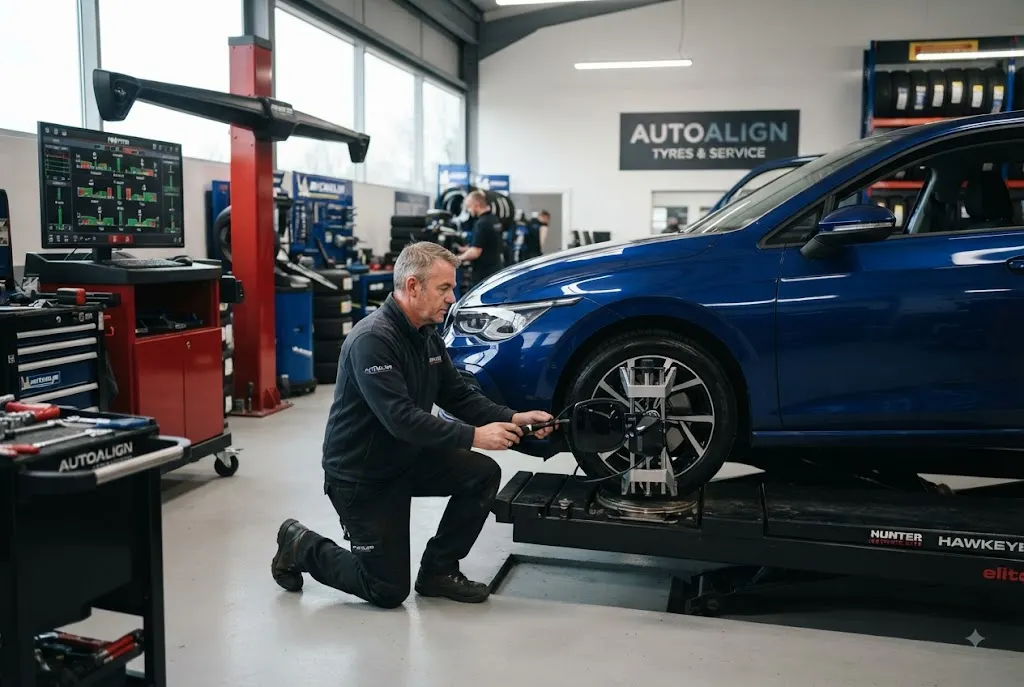
A professional alignment service normally involves measuring the vehicle’s wheel angles using specialised equipment. The technician compares the measurements with the appropriate specifications and determines whether adjustment is necessary.
If adjustments are possible and appropriate, the technician can alter the relevant settings. However, alignment may reveal another issue that needs attention first.
For example, worn suspension or steering components can prevent the vehicle from maintaining the correct geometry. In that situation, replacing or repairing the worn component may need to happen before the final alignment is completed.
Ask the garage whether you will receive alignment measurements or a report. Having the results explained can help you understand what has changed and why the work is recommended.
How to Choose a Garage for Alignment Work
Not every workshop has the same alignment equipment or level of experience. When comparing automotive service companies, ask whether they have suitable alignment equipment for your vehicle and whether technicians regularly perform the service.
It is also useful to choose a workshop that can investigate related steering, suspension and tyre problems. Alignment is sometimes the symptom rather than the complete solution, so a garage should be capable of checking the wider system.
A trustworthy service provider should also explain the measured problem before recommending additional work. If suspension parts are required, ask why they are necessary and how they relate to the alignment issue.
How to Protect Your Alignment
Drivers cannot prevent every alignment problem, but sensible driving and regular maintenance can reduce the likelihood of unexpected issues.
- Drive carefully over potholes and speed bumps.
- Avoid striking kerbs where possible.
- Check tyre pressure regularly.
- Inspect tyres for uneven wear, cuts and other damage.
- Pay attention to changes in steering behaviour.
- Have suspension and steering problems investigated promptly.
- Consider an alignment check after a significant road impact.
- Ask for alignment checks after relevant steering or suspension repairs.
- Keep records of tyre and suspension work.
These habits do not guarantee that alignment will remain perfect, but they can make developing problems easier to identify.
Wheel Alignment as Part of Maintenance Awareness
Wheel alignment is most useful when viewed as part of a wider vehicle maintenance routine. A vehicle that tracks correctly, has evenly worn tyres and responds predictably to steering inputs is easier to drive with confidence.
At the same time, alignment should not be used as a catch-all explanation for every handling or tyre problem. Tyre pressure, balancing, suspension wear, steering components and road conditions can all affect vehicle behaviour.
A professional inspection can help identify the actual cause and prevent unnecessary repairs.
Final Thoughts on Wheel Alignment
Wheel alignment can have an important role in maintaining tyre wear, steering response, vehicle stability and smoother driving. Problems may develop after pothole impacts, kerb strikes, suspension repairs or normal component wear, but they can also appear without an obvious event.
Drivers should pay attention to warning signs such as uneven tyre wear, pulling to one side, an off-centre steering wheel and unusual changes in handling. These symptoms do not prove that alignment is the problem, but they are good reasons to have the vehicle inspected.
Regular tyre checks remain equally important. TyreSafe recommends monitoring tyre pressure, condition and tread depth, while professional garages can assess alignment and related steering or suspension issues when necessary.
By treating wheel alignment as part of proactive maintenance rather than waiting for severe symptoms, UK motorists can make better-informed decisions about tyre care, steering performance and long-term vehicle confidence.