

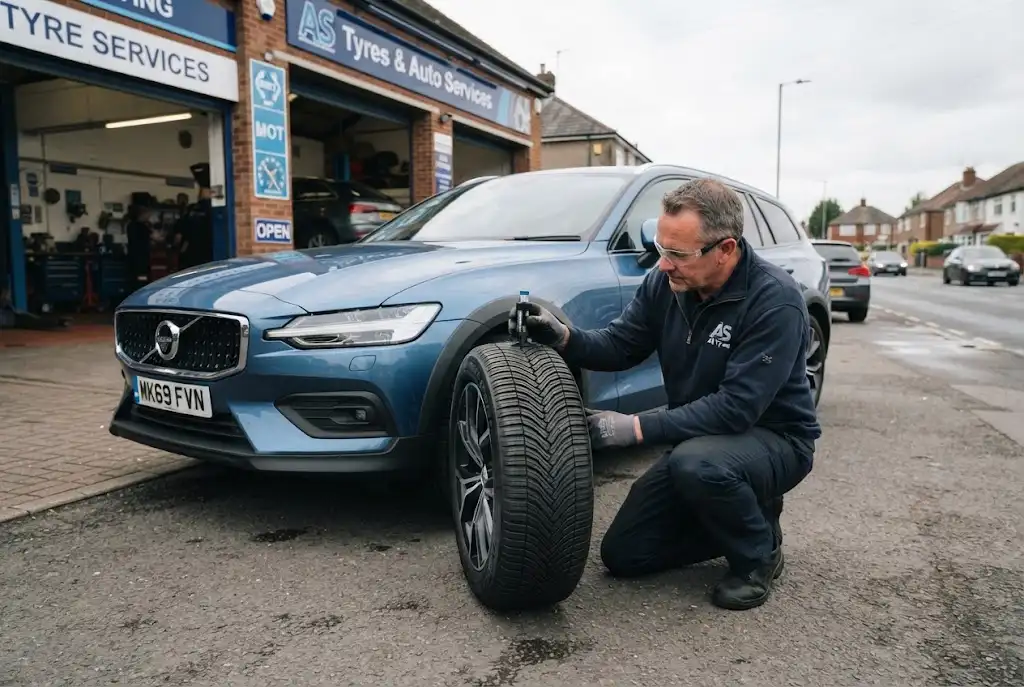
Tyre services are an important part of responsible vehicle ownership. Your tyres are the only part of the car that maintains direct contact with the road, so their condition can influence grip, steering, braking and overall driving confidence. Regular checks, timely tyre fitting and sensible replacement decisions can help reduce avoidable risks while keeping your vehicle roadworthy.
Tyre care is not something that should only be considered when an MOT is approaching or when a tyre has already developed a serious problem. A simple preventive maintenance routine can help identify pressure issues, uneven wear, visible damage and worn tread before they become bigger concerns. For drivers covering long distances, carrying heavier loads or regularly travelling in poor weather, consistent tyre checks become even more important.
Why Tyre Services Matter for Everyday Driving
Modern cars depend on tyres for much more than simply moving the vehicle forward. The condition and inflation of the tyres can affect how confidently a car responds to steering inputs and how effectively it can slow down. Poorly maintained tyres may also contribute to reduced handling performance and unnecessary wear.
For that reason, professional tyre services can form an important part of a wider vehicle maintenance routine. Depending on the condition of the tyres, this may involve inspection, pressure checks, balancing, tyre fitting or replacement.
Drivers should also remember that an MOT certificate does not remove their responsibility to keep a vehicle safe between tests. GOV.UK states that drivers are responsible for ensuring their vehicles are safe to drive and specifically advises checking tyres for the correct tread depth and defects. GOV.UK vehicle safety guidance provides further information on basic roadworthiness checks.
Understanding Tyre Safety Requirements
Tyre safety combines legal requirements with sensible maintenance. For cars and light vans in the UK, tyres generally need at least 1.6mm of tread across the central three-quarters of the tread and around the entire circumference. Tyres must also be correctly inflated and free from relevant cuts, damage and defects.
The legal minimum should not be treated as a target for routine maintenance. A tyre can require attention because of damage, uneven wear, pressure loss or other problems even when its tread has not reached the legal limit. Checking the entire tyre rather than looking at tread depth alone is therefore a more responsible approach.
GOV.UK guidance also recommends checking tyre pressures against the vehicle manufacturer’s specification. The correct pressure can depend on the vehicle and the load being carried, so drivers should consult the vehicle handbook or the manufacturer’s recommended information rather than relying on a generic pressure figure.
How Regular Tyre Checks Support Preventive Maintenance
Preventive maintenance means dealing with small issues before they develop into expensive or potentially dangerous problems. Tyres are particularly suitable for this approach because many basic checks can be completed regularly.
Check tyre pressure
Incorrect tyre pressure can affect the way a vehicle behaves on the road. Under-inflation can also contribute to additional tyre wear. Drivers should check pressures when the tyres are in an appropriate condition for measurement and use the manufacturer’s recommended figures.
Inspect the tread
Look across the tyre rather than checking just one point. Uneven tread wear can indicate that something needs further investigation. A tyre that appears acceptable in one area may be considerably more worn elsewhere.
Look for visible damage
Check the sidewalls and tread for cuts, bulges, cracks or other obvious damage. If a tyre looks damaged or has suffered a significant impact, professional assessment is sensible rather than assuming it is safe because it still holds air.
Watch for unusual wear
Uneven wear patterns can provide clues about alignment, suspension, inflation or other vehicle issues. Addressing the underlying cause can be just as important as replacing the worn tyre.
When Is Tyre Fitting Necessary?
Tyre fitting becomes necessary when a new tyre needs to be installed on the vehicle. Although buying a tyre may appear straightforward, correct fitting is an important part of ensuring the replacement is suitable for the vehicle and installed properly.
The replacement tyre should be compatible with the vehicle’s requirements, including its size, specification and load characteristics. Professional fitting can also provide an opportunity for the condition of the wheel and surrounding components to be assessed.
Drivers should avoid choosing tyres based solely on the cheapest headline price. The right decision should consider suitability, expected use, driving conditions and overall value. A tyre that is appropriate for the vehicle and the driver’s needs can be a more sensible choice than simply selecting the lowest-cost option available.
Knowing When Tyre Replacement Is the Better Choice
Tyre replacement may be necessary when tread has reached the legal limit, when significant damage is present or when a tyre has deteriorated to a point where continued use is inappropriate.
There is no single replacement schedule that applies to every vehicle. Tyre life can vary according to driving style, mileage, road conditions, vehicle characteristics, storage and maintenance. Instead of relying on age or mileage alone, drivers should regularly assess actual condition.
It is also worth investigating why a tyre has worn unusually quickly. Replacing the tyre without addressing an underlying alignment, pressure or suspension issue could result in the replacement wearing in a similar way.
Tyre Services and Seasonal Driving Conditions
UK drivers experience changing road conditions throughout the year. Wet roads, standing water, cold temperatures and poor visibility can all make attentive vehicle preparation more important.
Good tyre maintenance does not eliminate every driving risk, but it gives drivers a stronger foundation for dealing with changing conditions. Correct pressure, adequate tread and sound tyre condition should therefore be treated as part of responsible preparation rather than optional extras.
Before a longer journey, particularly a motorway trip or holiday drive, it is sensible to check the tyres alongside other basic vehicle checks. GOV.UK and THINK! guidance both emphasise routine vehicle checks as part of safer driving.
Tyre Care Can Help Control Ownership Costs
Tyre maintenance is also connected to the broader cost of owning a vehicle. Ignoring a developing problem can sometimes lead to additional wear or an unexpected repair at an inconvenient time.
A planned approach can make vehicle spending easier to manage. Instead of waiting for a complete failure, drivers can identify upcoming maintenance needs and include them in their ownership budget. For broader planning around unexpected vehicle costs, see our guide to repair finance and managing repair costs.
This approach does not mean replacing components unnecessarily. Good maintenance is about making informed decisions based on actual condition and manufacturer guidance rather than replacing parts simply because a certain amount of time has passed.
Responsible Driving Starts Before You Leave
Responsible driving involves more than following speed limits and observing traffic signs. The condition of the vehicle itself matters. A driver who checks their tyres, lights, fluids and other essential components is taking practical steps towards safer journeys.
That is particularly important before longer trips. A few minutes spent checking the vehicle can help identify a problem before the journey begins. It also gives the driver an opportunity to deal with maintenance rather than discovering an issue on the roadside.
For drivers considering another vehicle, tyre condition should also form part of the buying assessment. Anyone researching used cars and second-hand vehicles should look beyond the purchase price and consider the condition of consumable items such as tyres, along with maintenance records and likely ownership expenses.
What to Ask About Tyre Fitting and Replacement
When arranging professional tyre work, drivers can improve their decision-making by asking a few practical questions. These may include whether the proposed tyre matches the vehicle specification, whether the existing tyres show uneven wear, whether balancing or other checks are recommended, and whether there are signs of an underlying mechanical issue.
It is also useful to understand what is included in the quoted service. Comparing services based on the complete job rather than the advertised tyre price alone can make it easier to understand the real cost.
Good communication is especially valuable when a tyre is being replaced because of damage. Understanding what caused the damage can help prevent the same problem from happening again.
Building a Simple Tyre Maintenance Routine
A practical tyre routine does not need to be complicated. Check tyre pressure regularly, inspect the tread and sidewalls, pay attention to unusual handling or vibration, and arrange professional inspection when something does not look right.
Before longer journeys, repeat the basic checks and make sure the vehicle is carrying the correct load. If the vehicle handbook provides specific instructions for tyre pressures, sizes or replacement specifications, use those recommendations as the starting point.
Drivers should also avoid postponing a clear tyre problem simply because the vehicle is still driveable. A tyre can deteriorate without producing an immediate warning light, and waiting until a problem becomes obvious can leave fewer options for dealing with it safely.
Tyre Services as Part of Smarter Vehicle Ownership
Tyre care sits within a much wider picture of vehicle ownership. The best maintenance decisions combine safety, timing and financial awareness. Regular checks can help drivers understand what their vehicle needs, while professional services can address problems that require specialist equipment or assessment.
For anyone planning to purchase or finance a vehicle, these running costs should also be considered before committing to ownership. Our related guide to car finance and ownership budgeting explores the wider financial side of choosing a vehicle.
Likewise, drivers researching potential vehicles online can benefit from comparing listings carefully and considering condition alongside price. Research through an online vehicle marketplace such as AutoTrader UK can be one part of a wider buying process, but inspection and maintenance considerations should remain central to the final decision.
Final Thoughts on Tyre Safety
Tyres deserve regular attention because their condition directly affects the connection between your vehicle and the road. Routine checks, appropriate tyre fitting and timely replacement can support safer driving while helping drivers plan maintenance more effectively.
The most sensible approach is proactive rather than reactive. Check pressures, inspect tread and visible condition, respond to unusual wear, and seek professional advice when a tyre may be damaged or unsuitable. Combined with responsible driving and wider preventive maintenance, consistent tyre care can help make everyday journeys safer and vehicle ownership more predictable.
