Good scalp care is the quiet foundation of healthy hair, yet it is the step most routines skip entirely. We buy products for lengths, ends and colour, and then wonder why hair still looks flat at the roots, feels itchy by day two, or seems to shed more than it used to. The scalp is skin, with the same needs for gentle cleansing, balance and occasional exfoliation as the skin on your face, and it responds to the same calm, consistent approach. This guide explains what your scalp actually needs, how to build a simple weekly routine, and which habits quietly make common scalp problems worse.
Why Scalp Health Matters
Every strand of hair grows from a follicle in the scalp, and the condition of that environment shapes how the hair looks and feels as it grows. A scalp that is overloaded with styling product, natural oil and dead skin can leave hair looking dull and lifeless at the roots, while a dry, irritated scalp often shows up as flaking, tightness and itching. Neither problem is solved by piling on more product for the lengths. As with most things in beauty, the slower and more consistent approach tends to win, a philosophy we explore in our piece on slow beauty.
It is also worth remembering that the scalp changes over time. Hormones, stress, seasons, medication and ageing all influence how much oil it produces and how sensitive it becomes, which is why a routine that worked at twenty-five may need adjusting later on. Our article on UK beauty consumer trends notes how strongly this idea of adapting routines to life stage has taken hold.
The Building Blocks of a Scalp Care Routine
Cleanse properly, not aggressively
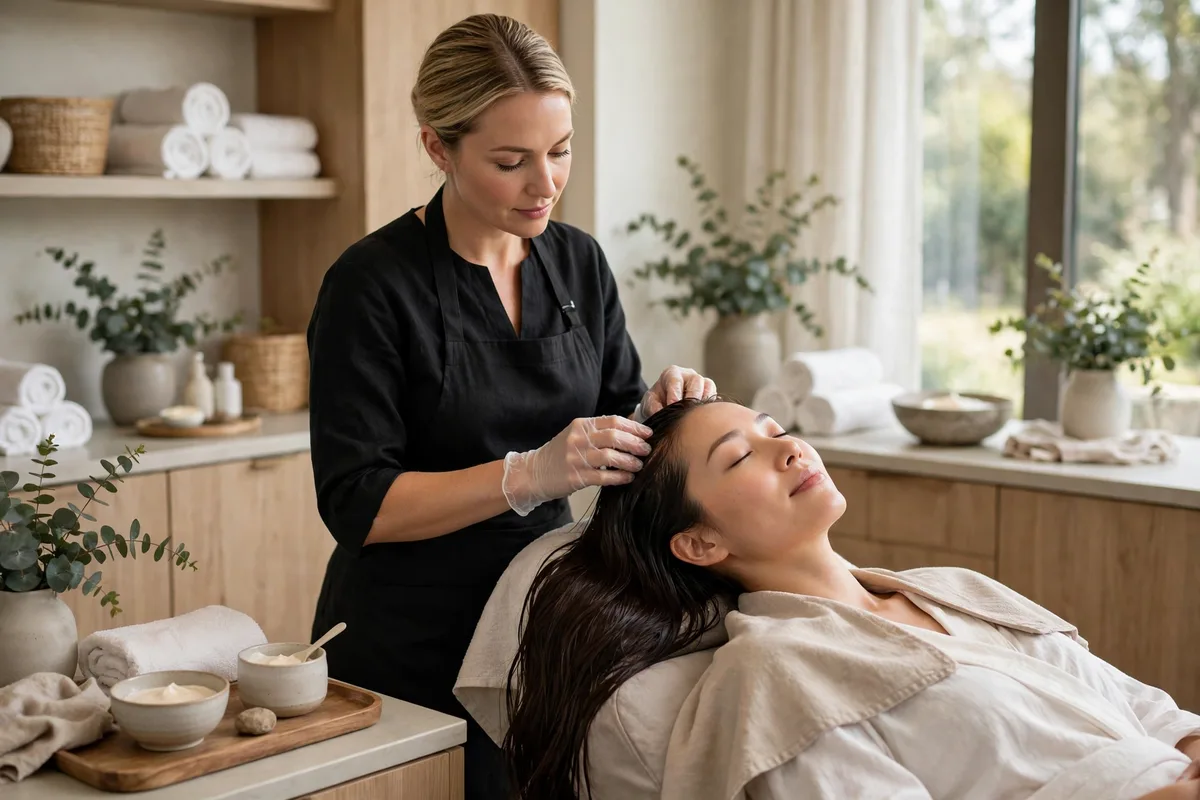
Most scalp problems start with washing technique rather than the wrong bottle. Shampoo is primarily for the scalp, not the lengths: apply it to the roots, massage gently with your fingertips (never your nails) for a full minute, and let the rinse water carry the lather through the ends. If you use a lot of styling product, a second gentle shampoo is more effective than one harsh one. Water temperature matters too; very hot water strips natural oils and can leave the scalp tight and reactive, so lukewarm is the kinder setting.
Exfoliate once a week
Just as facial skin benefits from occasional exfoliation, the scalp can build up a layer of dead skin, oil and product residue that regular shampoo does not fully shift. A dedicated scalp scrub or a gentle chemical exfoliant used once a week helps keep follicles clear and often makes hair feel lighter and cleaner for longer. Keep it to once a week: over-exfoliating is a reliable route to irritation, and more is not better.
Condition with intention
Conditioner belongs mainly on the mid-lengths and ends. Heavy conditioners and masks applied directly to the scalp can weigh roots down and contribute to build-up, unless the product is specifically made for scalp use. If your scalp is dry rather than oily, a lightweight scalp serum or a few drops of a suitable oil, massaged in and washed out later, can help without overwhelming the roots.
Common Scalp Concerns, Handled Calmly
Flaking is not always dandruff. Dry, small flakes often come from a dry scalp, cold weather or overwashing, while larger, oilier flakes are more typical of dandruff and may respond better to an anti-dandruff shampoo used consistently for a few weeks. Itchiness frequently traces back to product build-up, fragrance sensitivity or simply not rinsing thoroughly. Oiliness within a day of washing is usually a sign to cleanse more thoroughly rather than more harshly, and to check how much product is being applied at the roots.
Persistent problems deserve proper attention. Ongoing redness, soreness, crusting, patches of hair loss or flaking that does not respond to gentle care are reasons to see a pharmacist, GP or dermatologist rather than to keep buying new bottles. The calmer message running through our guide to sustainable beauty applies here too: fewer, better-chosen products, used consistently, beat a bathroom shelf of experiments.
Everyday Habits That Help (and Harm)
A few small changes make a noticeable difference. Brush gently before washing to loosen build-up and distribute natural oils. Rinse hair products out thoroughly, especially after exercise. Give wet hair a little air rather than tying it up tightly while it is still damp, and go easy on very tight hairstyles that pull on the same follicles day after day. Dry shampoo is useful between washes, but it is an addition to cleansing, not a replacement for it.
On the other side of the ledger, scratching with nails, daily use of very hot styling tools close to the roots, and layering several fragranced products on sensitive skin are common, quiet causes of irritation. If you are simplifying your routine, the principles in our London beauty guide and our round-up of beauty trends in the UK point in the same direction: the trend cycle is loud, but scalps prefer quiet.
Start with technique before products. One thorough, gentle wash, one weekly exfoliation and a little patience will tell you more about your scalp in a month than a shelf of new purchases. Scalp care is not glamorous, but it is the step everything else stands on.
A Simple Weekly Scalp Care Rhythm
If a full routine sounds like another demand on a busy week, it helps to lay it out plainly, because scalp care is mostly about doing ordinary things in the right order. On wash days, which for most people means two or three times a week, focus the shampoo on the scalp, massage gently for a full minute, rinse thoroughly and keep conditioner to the lengths. Once a week, swap one wash for an exfoliating treatment before you shampoo, and give yourself an extra minute of slow fingertip massage while it works; this is the part that shifts build-up and leaves the scalp feeling properly clean.
Between washes, keep things quiet. Brush gently once a day, avoid piling dry shampoo and styling sprays onto the same roots day after day, and let hair dry fully before tying it up. Then, once a month or so, take stock: is the flaking better or worse, does the itch return at the same point in the week, is hair staying fresher for longer? That small monthly check matters more than any single product, because the scalp you have this season may not be the scalp you have next season, and the routine should be adjusted to the evidence in front of you rather than followed out of habit.